
Raccoon Management 101
Mar 17, 2026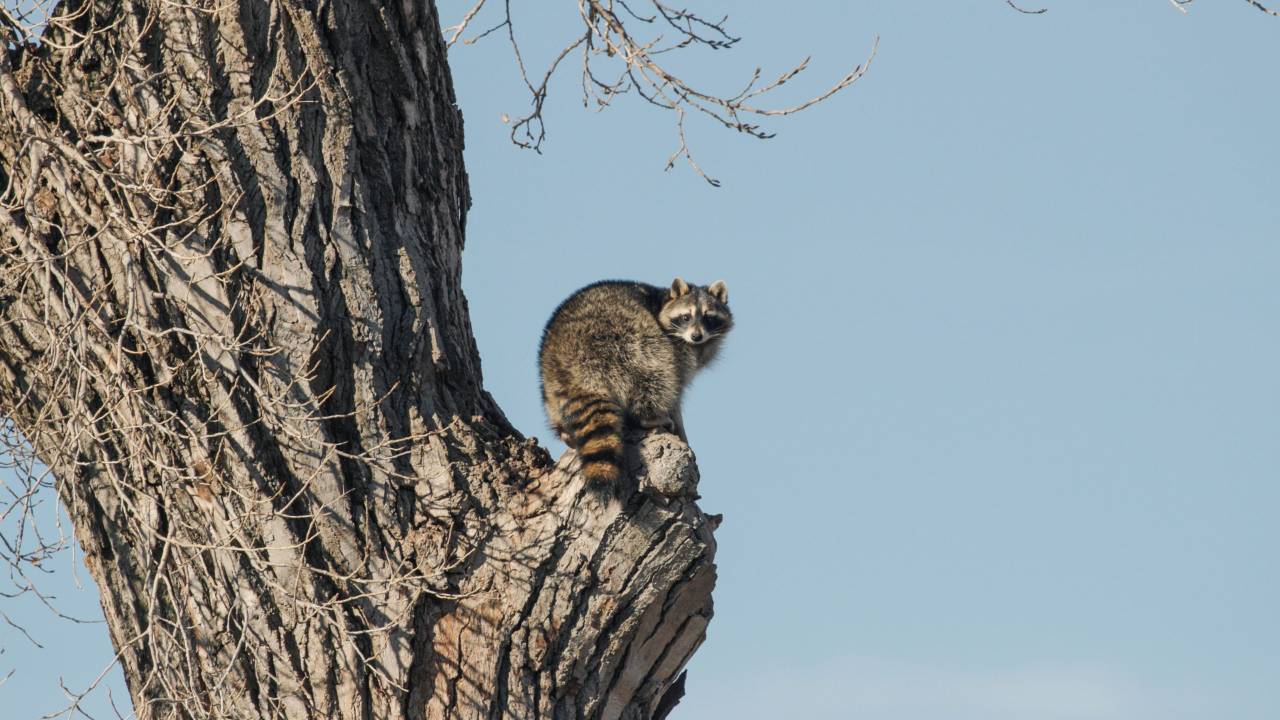
Raccoon management is critical to maintaining healthy populations of turkeys and other bird species on the properties you hunt. Late winter through early spring is the prime time to manage properties before nesting season, making daytime raccoon calling a fun and effective way to keep populations in check. With most fur prices at all-time lows, the trappers who have kept raccoon numbers in check for years have all but vanished, leaving exploding raccoon populations across much of the United States. Although not every state allows you to hunt raccoons year-round because of their furbearer status, many states offer liberal seasons that allow hunters to take advantage of this underrated pastime.

The key to successfully calling raccoons during the daytime is finding where they are bedded up. This could be large den trees, brush and junk piles, or abandoned houses and buildings. The larger the tree, the bigger the brush pile, or the more dilapidated the building, the better. Once these areas are identified, simply sneak in and set up downwind of where you think the raccoons will come from. Place your e-call approximately 15–30 yards from where you expect the raccoons to appear and select a sound from your raccoon folder. Some of the best sounds you’ll find on a Lucky Duck e-caller are Raccoon Distress #2 and Raccoon Fight.
Once you're ready, hit play, crank the e-call to max volume, and let the first sound play for 1.5–2 minutes. If nothing shows up, switch to a second sound and let it play for another 1.5–2 minutes. At that point, after being on stand for 3–4 minutes, you will have either had a raccoon interaction or there simply wasn’t a raccoon there. From there, move on to the next spot, which in some cases may only be several hundred yards away.
The next time you're looking for something to hunt in the offseason, or a great way to get a kid involved in hunting, grab your e-call and give daytime raccoon calling a try. It’s fun, fast-paced, and you’ll be providing a valuable service to the nesting birds in your area.

